L-Carnitine Product Description
L-Carnitine is a naturally occurring compound derived from amino acids that plays an essential role in energy metabolism. It functions primarily as a transporter molecule for long-chain fatty acids, shuttling them from the cytoplasm into mitochondria where they can be oxidized to produce energy.
Chemically, L-carnitine is known as 3-hydroxy-4-N-trimethylaminobutyrate. It exists in two stereoisomeric forms: L-carnitine (the biologically active form) and D-carnitine.
In biochemistry, L-carnitine:
- Facilitates the transport of activated long-chain fatty acids across the inner mitochondrial membrane
- Helps regulate the ratio of acyl-CoA to free CoA in mitochondria
- Participates in removing toxic compounds from mitochondria
- Is involved in branched-chain amino acid metabolism
Peptide Information
| Property |
Value |
| Molecular Formula |
C7H15NO3 |
| Molecular Weight |
161.2 g/mol |
| CAS Number |
541-15-1 |
| Synonyms |
Levocarnitine, 541-15-1, (R)-Carnitine, Carnitor |
L-Carnitine Structure
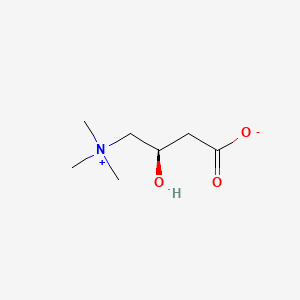
Source: PubChem
L-Carnitine Research
L-Carnitine is a versatile compound with therapeutic potential across various health domains, including cardiovascular health, metabolic disorders, neurological conditions, exercise recovery, and male fertility.
Cardiovascular Health
L-Carnitine has been identified as a potential therapeutic agent for cardiovascular diseases (CVD), which are a leading cause of mortality worldwide. It promotes mitochondrial β-oxidation, which is crucial for balanced cardiac energy metabolism, and has cardioprotective effects by reducing oxidative stress, inflammation, and necrosis of cardiac myocytes.1
L-Carnitine contributes to cellular homeostasis through regulation of calcium influx and preservation of endothelial integrity. Research indicates that exogenous L-Carnitine administration offers protection against various cardiovascular conditions, including ventricular dysfunction and ischemia-reperfusion injury.1
L-Carnitine has also been associated with a significant reduction in all-cause mortality, ventricular arrhythmias, and anginal symptoms in patients experiencing acute myocardial infarction.2
Insulin Resistance and Metabolic Health
L-Carnitine has shown promise in treating insulin resistance (IR), with studies indicating its effectiveness in improving the homeostasis model assessment of insulin resistance (HOMA-IR) scores. The potential of L-Carnitine in managing IR appears to increase with prolonged use, although further long-term studies are needed to confirm these findings.3
Moreover, L-Carnitine has been found to improve lipid profiles by reducing total cholesterol, LDL cholesterol, and triglycerides, while increasing HDL cholesterol.4
Neurological and Psychiatric Disorders
L-Carnitine plays a crucial role in maintaining cellular energy homeostasis and has been linked to neuroprotective effects. It is involved in the control of cerebral functions and has been studied in Drosophila models for its potential in treating neurodegenerative diseases.5
L-Carnitine has demonstrated therapeutic effects in managing conditions such as hepatic encephalopathy, Alzheimer’s disease, and cognitive disorders, although its efficacy in other neurological conditions like ALS and depression is less clear.6
Exercise and Recovery
In the context of physical performance, L-Carnitine has been investigated for its ergogenic benefits. It enhances exercise capacity by increasing maximum oxygen consumption and power output. L-Carnitine also aids in recovery post-exercise by reducing muscle injury, cellular damage, and muscle soreness, and improving blood flow and oxygen supply to muscle tissues.7
Male Fertility
L-Carnitine has been studied for its potential benefits in male fertility. It acts as an antioxidant, reducing reactive oxygen species in the testis, which can damage sperm. L-Carnitine has been shown to improve sperm parameters, regulate hormone levels, and enhance fertility rates, although further research is needed to fully understand the mechanisms.8
References
- Wang, Z., Liu, Y., Liu, G., Lu, H., & Mao, C. (2018). l‐Carnitine and heart disease. Life Sciences, 194, 88–97. https://doi.org/10.1016/j.lfs.2017.12.015.
- DiNicolantonio, J., Lavie, C., Fares, H., Menezes, A., & O’Keefe, J. (2013). L-carnitine in the secondary prevention of cardiovascular disease: systematic review and meta-analysis.. Mayo Clinic proceedings, 88 6, 544-51 . https://doi.org/10.1016/j.mayocp.2013.02.007.
- Xu, Y., Jiang, W., Chen, G., Zhu, W., Ding, W., Ge, Z., Tan, Y., , T., & Cui, G. (2017). L-carnitine treatment of insulin resistance: A systematic review and meta-analysis.. Advances in clinical and experimental medicine : official organ Wroclaw Medical University, 26 2, 333-338 . https://doi.org/10.17219/acem/61609.
- Askarpour, M., Hadi, A., Symonds, M., Miraghajani, M., Miraghajani, M., Sadeghi, O., Sheikhi, A., & Ghaedi, E. (2019). Efficacy of l-carnitine supplementation for management of blood lipids: A systematic review and dose-response meta-analysis of randomized controlled trials.. Nutrition, metabolism, and cardiovascular diseases : NMCD. https://doi.org/10.1016/J.NUMECD.2019.07.012.
- Carillo, M., Bertapelle, C., Scialò, F., Siervo, M., Spagnuolo, G., Simeone, M., Peluso, G., & Digilio, F. (2020). L-Carnitine in Drosophila: A Review. Antioxidants, 9. https://doi.org/10.3390/antiox9121310.
- Wang, W., Pan, D., Liu, Q., Chen, X., & Wang, S. (2024). L-Carnitine in the Treatment of Psychiatric and Neurological Manifestations: A Systematic Review. Nutrients, 16. https://doi.org/10.3390/nu16081232.
- Fielding, R., Riede, L., Lugo, J., & Bellamine, A. (2018). l-Carnitine Supplementation in Recovery after Exercise. Nutrients, 10. https://doi.org/10.3390/nu10030349.
- Mateus, F., Moreira, S., Martins, A., Oliveira, P., Alves, M., & Pereira, M. (2023). L-Carnitine and Male Fertility: Is Supplementation Beneficial?. Journal of Clinical Medicine, 12. https://doi.org/10.3390/jcm12185796.
Certificate of Analysis (COA) for Every Batch
A Certificate of Analysis (COA) is a document that verifies a compound’s identity, purity, and batch quality through independent laboratory testing. Every compound from BioLongevity Labs ships with a COA tied to its specific batch, so researchers can confirm exactly what they received before it enters a protocol.
Each COA reports results from third-party laboratory analysis, including:
- High-performance liquid chromatography (HPLC) for purity, typically confirmed at 99% or higher
- Liquid chromatography mass spectrometry (LC-MS) for molecular identity and mass confirmation
- Sterility and endotoxin screening where applicable
- Chemical contaminant and residual solvent checks
COAs are sourced from independent certified labs rather than in-house testing alone, giving researchers a verifiable record of molecular integrity for each batch. All compounds are supplied for research use only.
Review the COAs for this batch below, or browse the full COA library.
No COAs available for this product.